Serving Blue Bell, PA and all surrounding areas across PA, NJ & Delaware — Free inspections available.
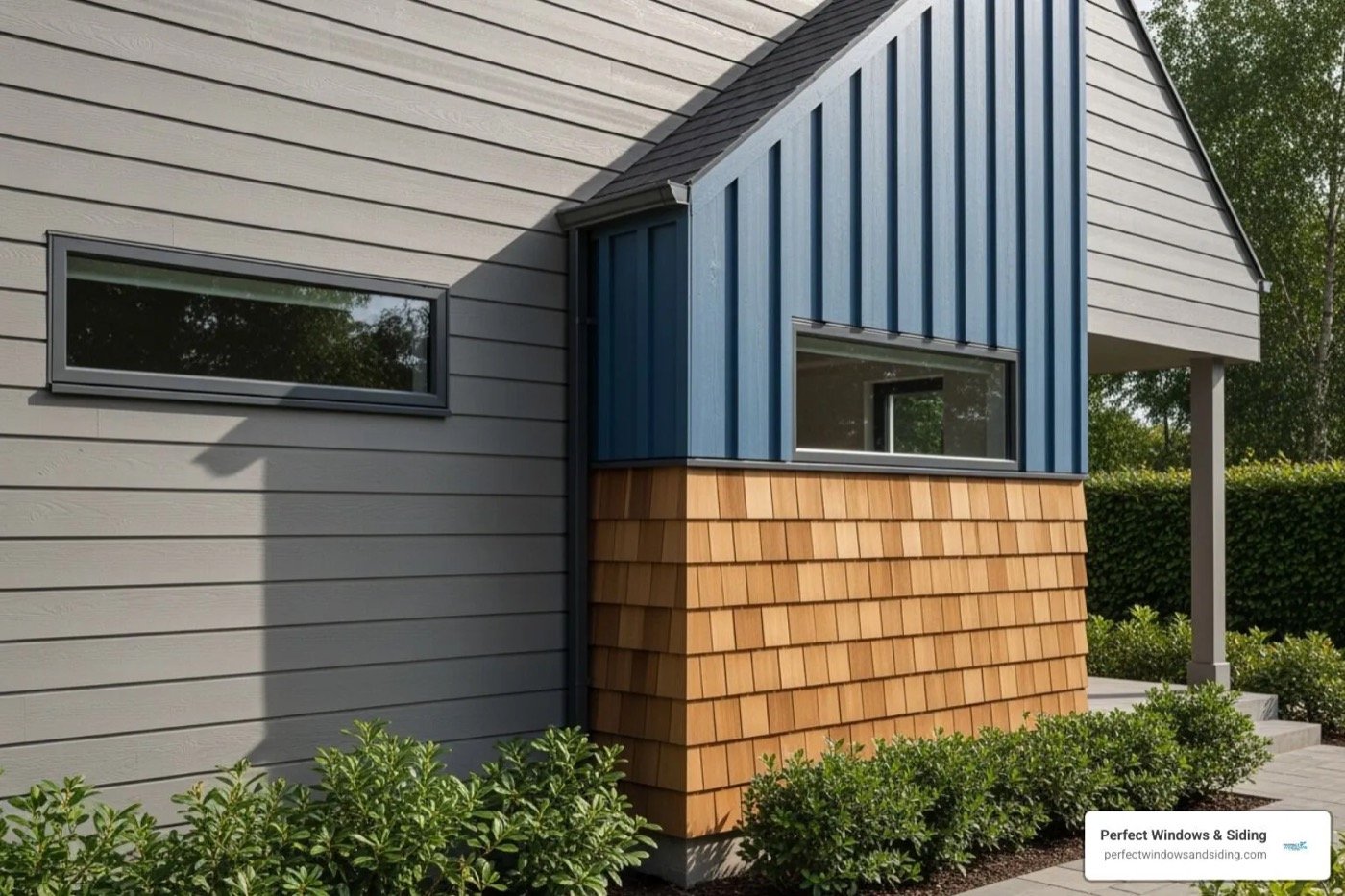
James Hardie® vertical fiber cement siding systems — precision-planned layout, modern farmhouse aesthetic, built for PA, NJ & Delaware climates.
Hardie board and batten siding is a premium vertical cladding system designed to deliver both architectural impact and long-term performance. Across PA, NJ, and Delaware, it is commonly selected for properties where the goal is to create a clean, intentional, and high-end exterior design.
Made from cement, sand, and cellulose fibers, Hardie fiber cement resists moisture, temperature fluctuations, impact, and long-term weather exposure. Unlike horizontal siding, vertical board and batten emphasizes height and proportion — when properly planned and installed, it creates a refined, structured, architectural appearance that sets a property apart.
This system is not just about installing vertical panels. It is about proper planning, layout, and system integration. Every decision — from spacing to trim placement — affects both how the siding performs and how it looks once completed.
| Feature | Vinyl Board & Batten | Hardie Board & Batten |
|---|---|---|
| Material | Flexible vinyl | Rigid fiber cement |
| Appearance | Lightweight look | Solid, high-end finish |
| Movement | Expands/contracts more | Minimal movement |
| Durability | Good | Superior |
| Installation | More forgiving | Requires precision |
| Lifespan | 20–40 years | 30–50+ years |
Every project begins with a full evaluation of the existing exterior. Where necessary, existing siding is removed to expose the structure and address any hidden issues before new materials are installed.
The wall sheathing is inspected and repaired. Fiber cement is rigid — any imperfections in the surface will be visible in the finished product. A solid base is non-negotiable.
A weather-resistant barrier is installed. Hardie siding is not waterproof — it relies on the system behind it. This layer protects against moisture, allows vapor to escape, and acts as the primary defense behind the siding.
Flashing is installed at windows, doors, roof-to-wall connections, and all penetrations. Vertical siding channels water downward more directly than horizontal systems — without proper flashing, water can concentrate at seams and increase moisture intrusion risk.
The entire wall is laid out before a single board goes up. This ensures straight vertical lines, even spacing, and a balanced design that aligns properly with windows, doors, and corners.
Fiber cement panels or boards are installed first, creating the base surface of the system. Precision spacing and fastening is applied at every board.
Battens are installed over the seams between boards. This covers joints, enhances the architectural appearance, and adds the dimensional depth that defines the board and batten aesthetic.
Corrosion-resistant fasteners designed specifically for fiber cement are used throughout. This prevents rust stains, fastener failure, and long-term structural issues.
Joints are sealed using caulking, trim boards, and proper spacing techniques to prevent water intrusion and maintain a clean appearance.
Hardie products come factory-finished or primed for painting. Factory finishes last longer and provide uniform color. Field painting follows manufacturer specifications for long-term performance.
Alignment is verified, panels and battens are inspected, the site is cleaned, and a final walkthrough is completed.
The material you choose matters — but how it is installed determines how long it performs. Improper installation can lead to warping, water intrusion, fastener failure, and shortened lifespan.
At Shelby Roofing Services, we focus on precision, proper system integration, and execution that holds up over time. Every project is permitted, documented with photos, and completed with a final walkthrough.
Official township record protecting your investment.
Before, during, and after photography for your records.
Manufacturer and workmanship warranties — both fully transferable.
Call, text, or email anytime throughout your project.
Everything you need to know about hardie board and batten siding from Shelby Roofing Services.
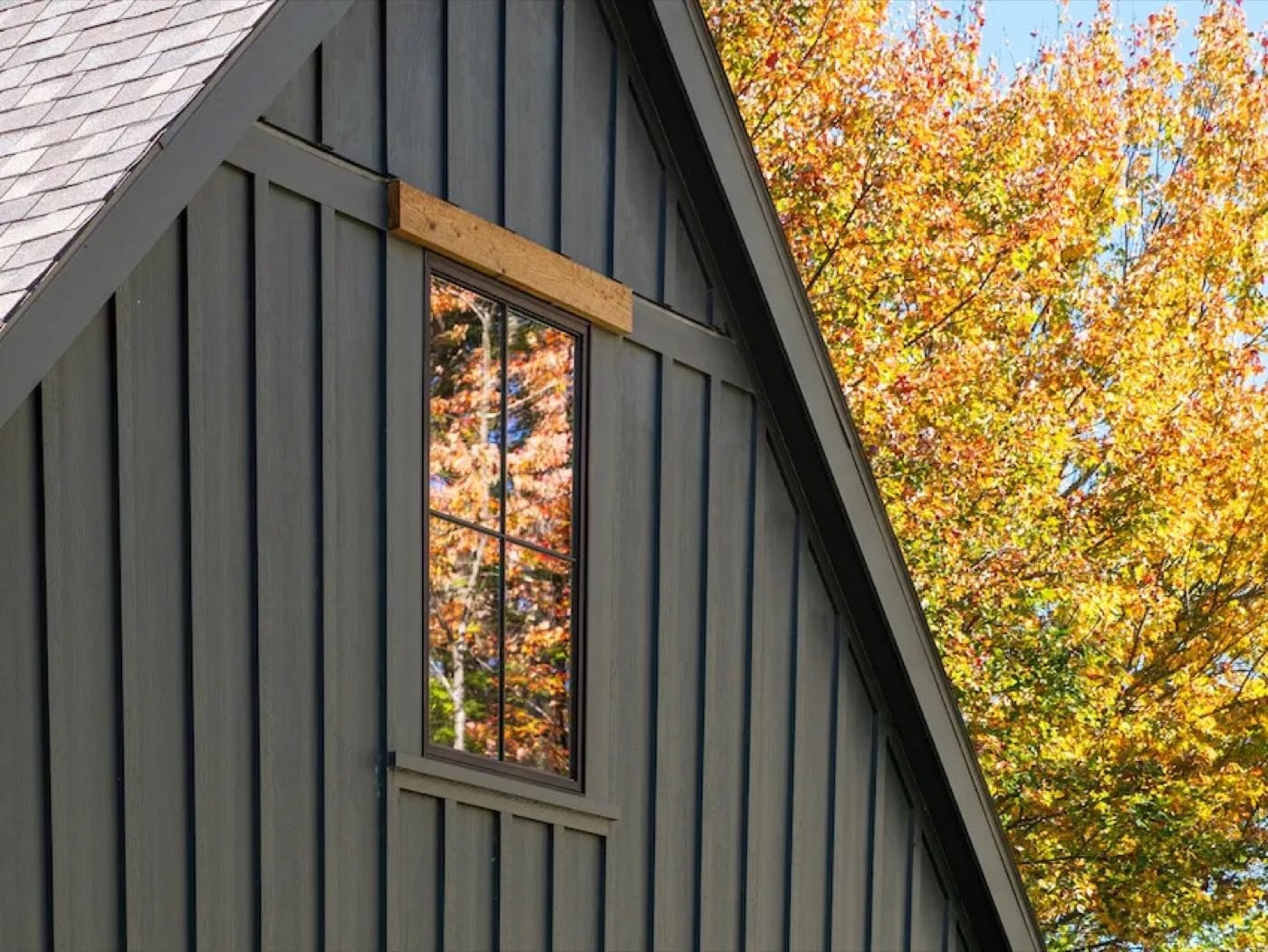
Hardie board and batten is a vertical siding style made from James Hardie fiber cement. It consists of wide vertical panels (boards) with narrow vertical strips (battens) covering the seams. Unlike horizontal siding, which draws the eye across the property, vertical board and batten emphasizes height and proportion, creating a more refined, architectural appearance.
Hardie board and batten offers significantly greater durability, a more solid and premium appearance, and far less visible movement over time compared to vinyl. Fiber cement is rigid and dimensionally stable, while vinyl expands and contracts more noticeably with temperature changes. Hardie requires more precise installation but delivers a superior long-term result.
A properly installed Hardie board and batten system is designed to last 30–50+ years. James Hardie products are engineered for specific climate zones, improving long-term performance in our region's seasonal temperature swings, moisture, and wind exposure.
Hardie board and batten is a premium siding investment. Costs in the Greater Philadelphia area typically range from $18,000 to $40,000+ depending on property size, layout complexity, trim design, and whether a factory finish or field paint is used. We provide detailed, itemized proposals before any work begins.
Yes — layout planning is critical with board and batten. The spacing between boards and the placement of battens must align with windows, doors, and the overall proportions of the property. Poor planning results in uneven spacing, misaligned visual lines, and a less professional result. Every project begins with a complete layout review.