(215) 847-3522
Call anytime • Mon–Fri 7am–5pm • Sat 7am–12pm
Schedule Your Free Evaluation
We’ll assess your current system, walk you through your options, and provide a clear, detailed proposal at no cost.
Serving Blue Bell, PA and all surrounding areas across PA, NJ & Delaware — Free inspections & quotes available.
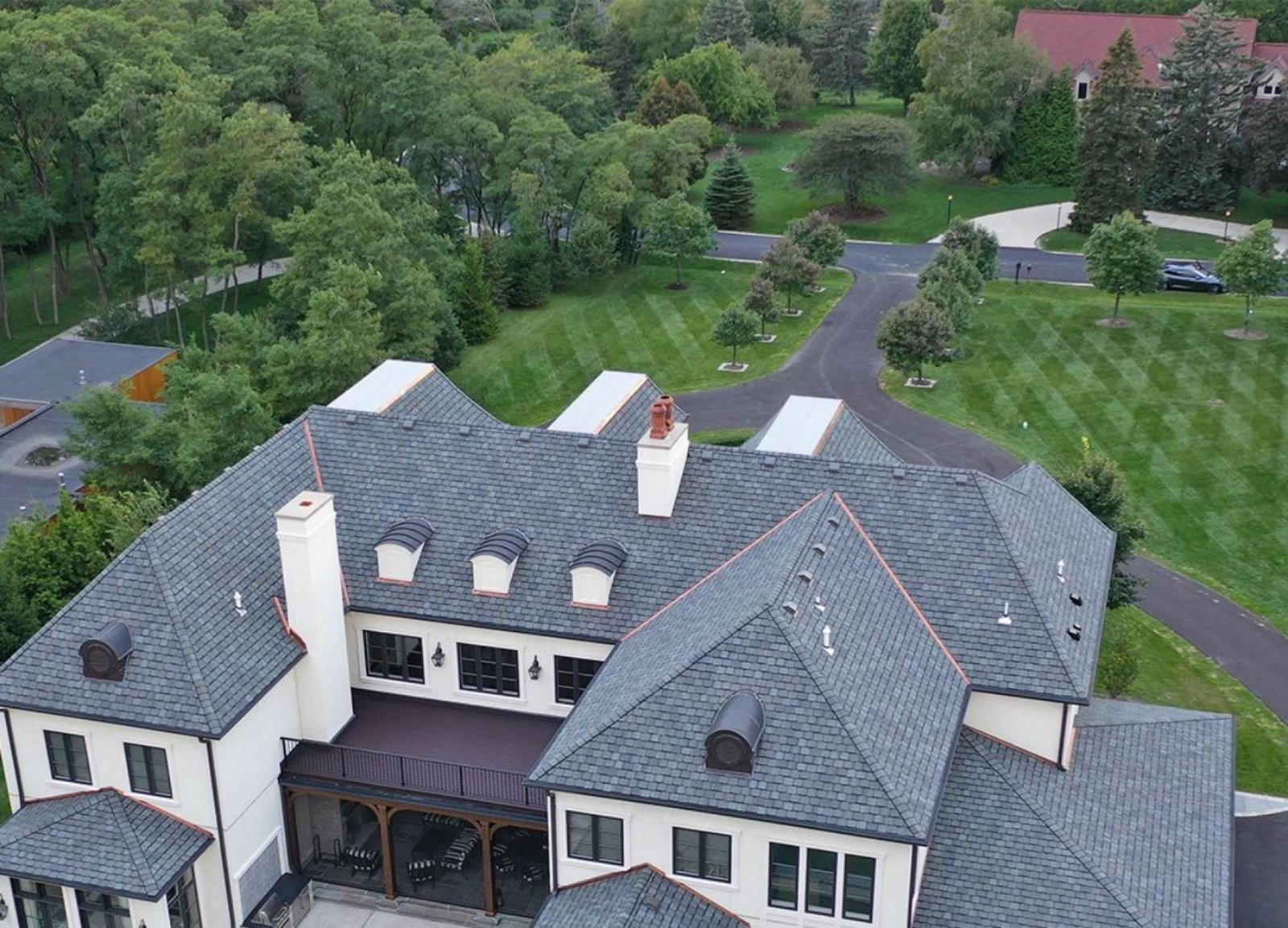
Architectural & Grand Manor Shingle Systems — Installed as a Complete Assembly
Shingle Roofing Across PA, NJ & Delaware
We’ll assess your current system, walk you through your options, and provide a clear, detailed proposal at no cost.
Shingle roofing is one of the most widely used and reliable roofing systems throughout the Greater Philadelphia Area. Whether replacing an aging roof or planning a new installation, choosing the right type of shingle — and the right contractor — plays a major role in how long the roof lasts and how well it protects the property. Architectural shingles provide a clean, dimensional look, while higher-end options such as Grand Manor offer a heavier, more defined appearance that can resemble slate.
Properties in this region are exposed to humidity, heavy rain, snow, wind, and seasonal temperature changes. A properly selected and installed shingle system is designed to handle these conditions while maintaining durability over time. Shingle roofing offers a strong balance between cost, performance, and appearance — though installation quality, ventilation, flashing details, and material selection all influence long-term results.
Schedule Free Evaluation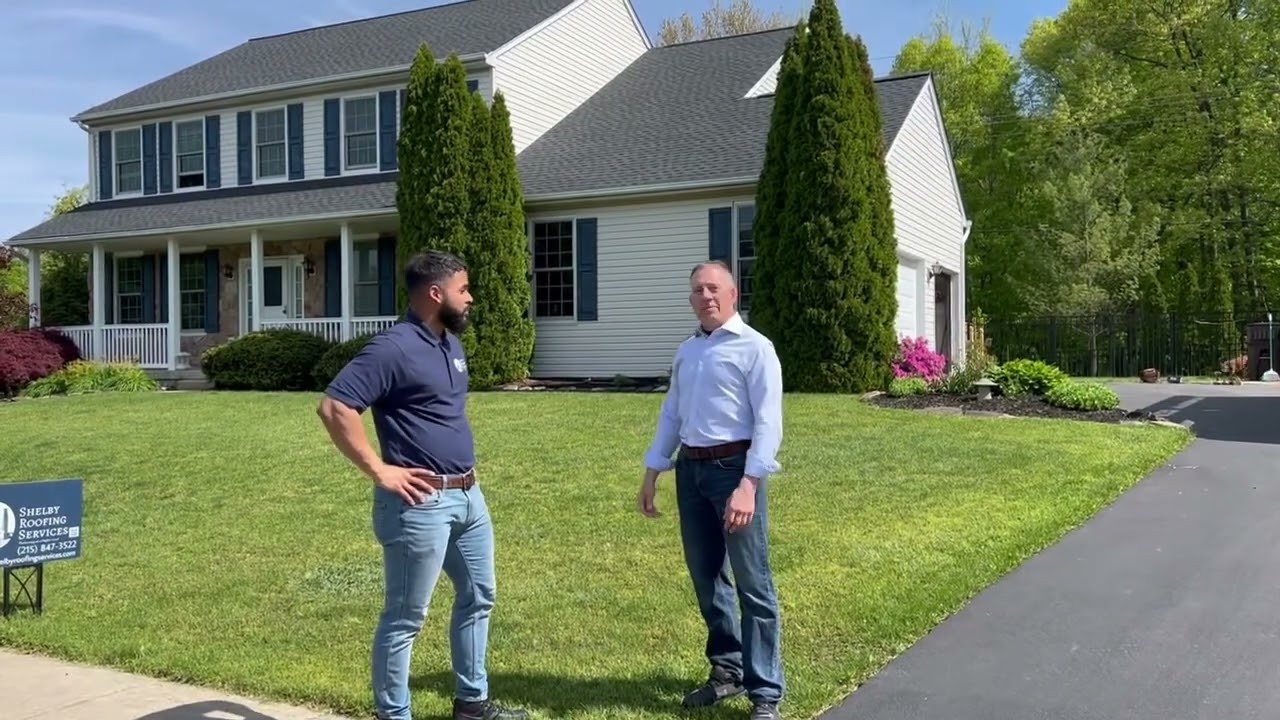
A shingle roofing system is a complete assembly designed to protect the structure from water intrusion while providing durability and long-term performance. While the shingles are the most visible component, they are only one part of a larger system that must work together properly. A properly installed system includes underlayment, ice and water barriers, ventilation components, drip edge, starter shingles, flashing details, ridge caps, and the shingles themselves. Each component plays a specific role in helping the roof shed water, resist wind, ventilate properly, and protect the property.
When installed as a complete system, shingle roofing provides a dependable and cost-effective solution that performs well in the conditions seen throughout this region.
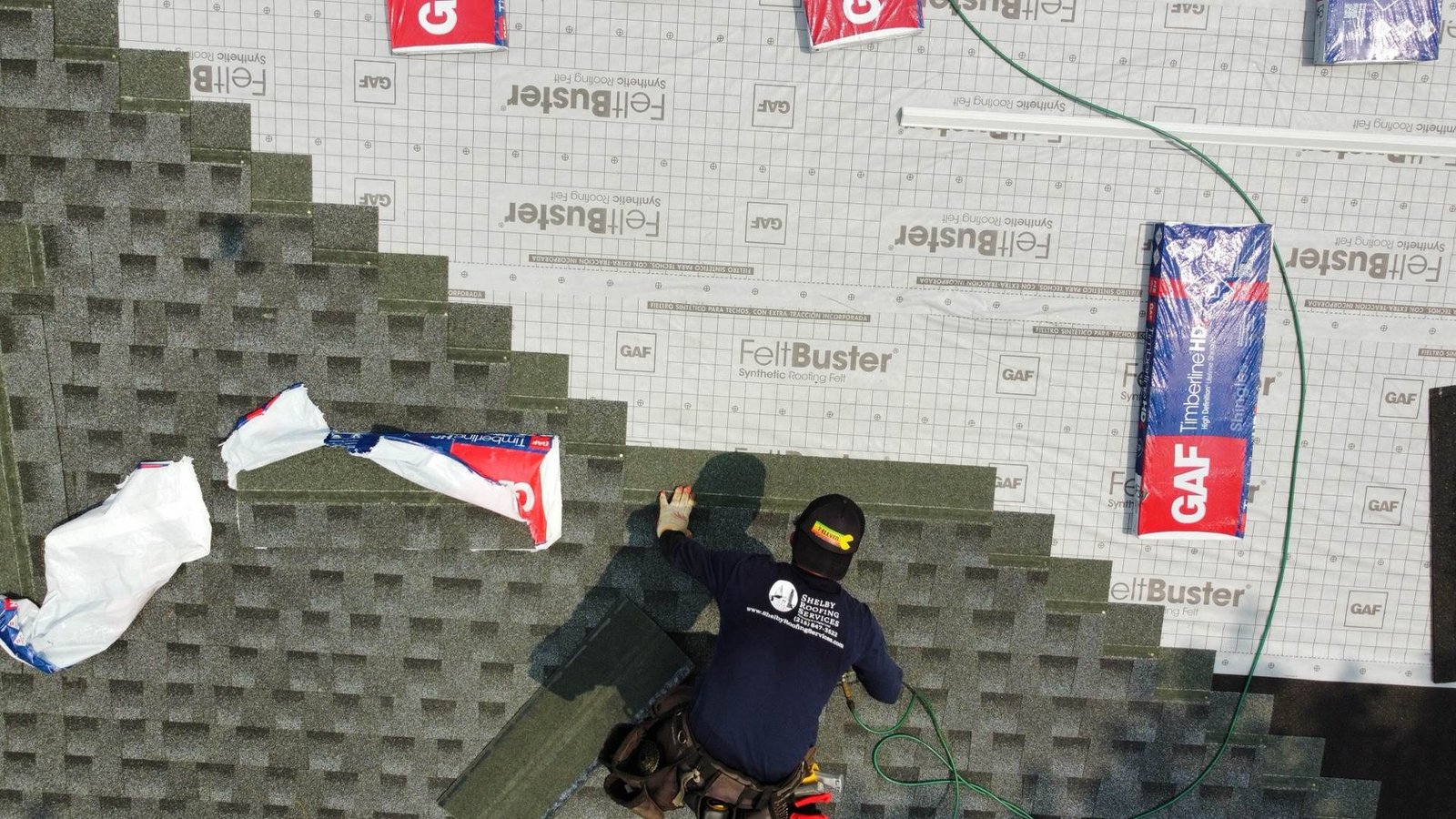
Every project begins with a complete tear-off of the existing roofing system. All shingles, underlayment, flashings, vents, pipe boots, and roofing accessories are removed. Nothing is reused. This matters because a new roof should be installed as a complete system. Reusing old flashing, vents, or accessories can create weak points where leaks may develop later. Starting fresh allows the decking, ventilation, flashing, and waterproofing details to be properly inspected and replaced. Once the old roofing system is removed, the wood decking is fully inspected. Any damaged, soft, rotted, or compromised wood is replaced before the new roofing system is installed. This is important because the shingles and underlayment need a solid surface to fasten into. If damaged wood is left in place, it can affect the strength of the roof, create uneven areas, and increase the risk of future leaks or structural issues.
Ice and water shield is installed in the most vulnerable areas of the roof, including eaves, valleys, roof penetrations, and other areas where water is more likely to collect or back up. The purpose of ice and water shield is to provide an additional layer of protection underneath the shingles. In colder climates, snow and ice can melt and refreeze near the roof edge, creating what is known as an ice dam. If water backs up underneath the shingles, the ice and water shield helps prevent that water from reaching the roof decking. At the eaves, ice and water shield is installed to extend past the warm wall of the building. This is important because the warm wall is where heated interior space meets the roof structure. If ice dams form near that area, water can back up under the shingles and cause leaks inside the property. In many standard installations, ice and water shield must extend at least 24 inches inside the exterior wall line. On certain roofs, depending on pitch, roof design, local code, or manufacturer requirements, additional coverage may be needed. Lower-slope roofs or areas more vulnerable to ice buildup may require wider protection.
Drip edge is installed along the edges of the roof to help direct water away from the fascia, roof decking, and underlying structure. This matters because without proper drip edge, water can curl back underneath the shingles and damage the wood along the roof edge. Drip edge also helps create a cleaner edge detail and supports the shingles at the perimeter of the roof.
Synthetic underlayment or felt paper is installed over the roof deck and properly overlapped with the ice and water shield. This layer provides secondary protection beneath the shingles. If wind-driven rain, moisture, or condensation gets underneath the shingles, the underlayment helps direct that water back down and off the roof. The underlayment must overlap the ice and water shield correctly so water flows over the layers instead of behind them. Roofing layers must be installed in the proper order, similar to shingles, so water always sheds downward and outward.
Starter shingles are installed along the eaves and rakes before the main shingles are installed. Starter shingles are important because they provide a sealed edge at the bottom and sides of the roof. This helps protect against wind uplift and reduces the chance of water entering beneath the first row of shingles. Without proper starter shingles, the edge of the roof becomes more vulnerable to wind damage and water intrusion.
The shingles are installed in courses according to manufacturer specifications. Proper spacing, alignment, nail placement, and overlap are critical. This matters because shingles are designed to work as a layered system. If they are nailed too high, too low, overdriven, underdriven, or installed out of alignment, it can affect wind resistance, appearance, and long-term performance. Proper shingle installation helps the roof shed water correctly, resist wind damage, and maintain a clean, professional appearance.
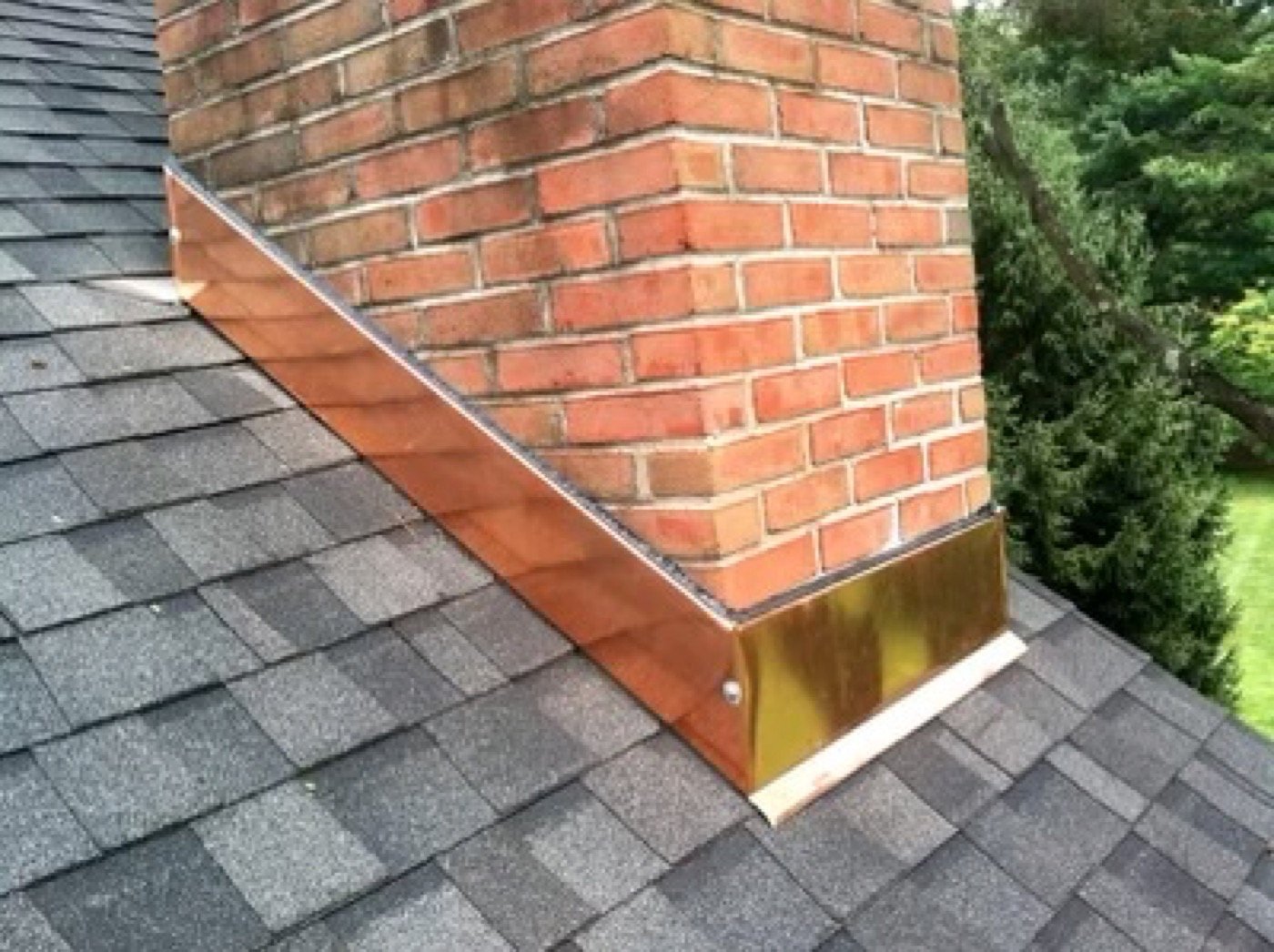
All new flashing is installed around chimneys, walls, valleys, skylights, pipes, and roof transitions. Flashing is one of the most important parts of a roofing system because most leaks occur at transitions and penetrations, not in the middle of an open roof field. New flashing helps direct water away from vulnerable areas and prevents water from entering where the roof meets another surface. Reusing old flashing is not recommended because it may already be worn, bent, improperly sealed, or incompatible with the new roofing system.
New pipe boots and penetration flashings are installed around plumbing vents and other roof openings. These areas are common leak points because they interrupt the roofing surface. Over time, old rubber pipe boots can crack, dry out, or separate from the pipe. Replacing them ensures these penetrations are properly sealed as part of the new roof system.
Ridge vent is installed along the peak of the roof when proper ventilation is needed and the roof design allows for it. The purpose of ridge ventilation is to allow hot, humid air to escape from the attic. Proper ventilation helps reduce heat buildup in the summer and moisture buildup in the winter. This matters because poor ventilation can shorten the lifespan of shingles, contribute to mold or moisture issues, and create temperature imbalance inside the property. A balanced ventilation system helps the roof perform better over time.
Ridge cap shingles are installed over the ridge vent and along roof peaks and hips to complete the system. Ridge caps protect the highest points of the roof where two roof slopes meet. These areas are exposed to wind and weather, so they require shingles specifically designed for that location. Proper ridge cap installation helps complete the roof system, protect the ridge, and create a finished appearance.
After installation is completed, the roofing system is reviewed, cleanup is performed, and the property is checked for debris and nails.
This final step matters because a roofing project is not complete until the system has been inspected and the property has been left clean. The final walkthrough gives the homeowner an opportunity to review the work and ask questions before the project is closed out.
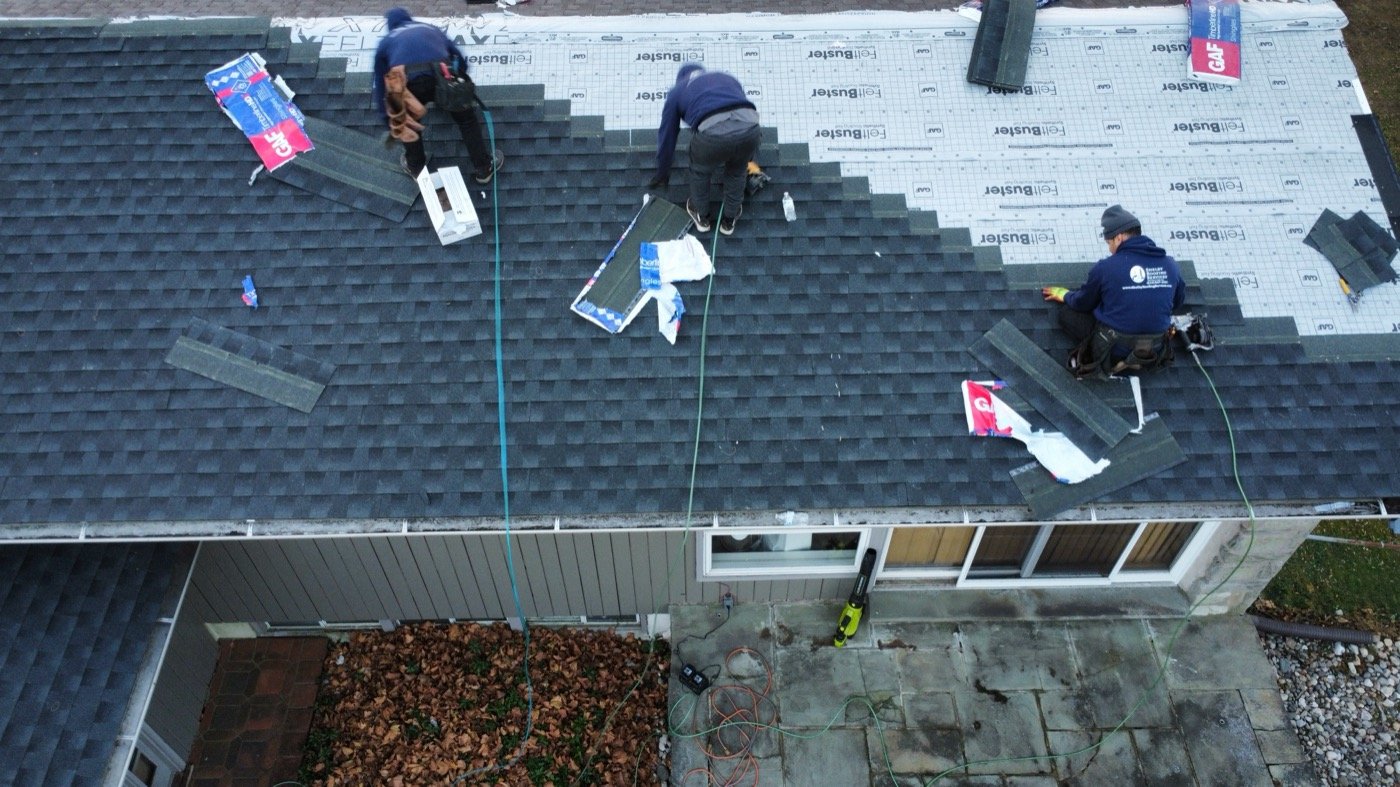
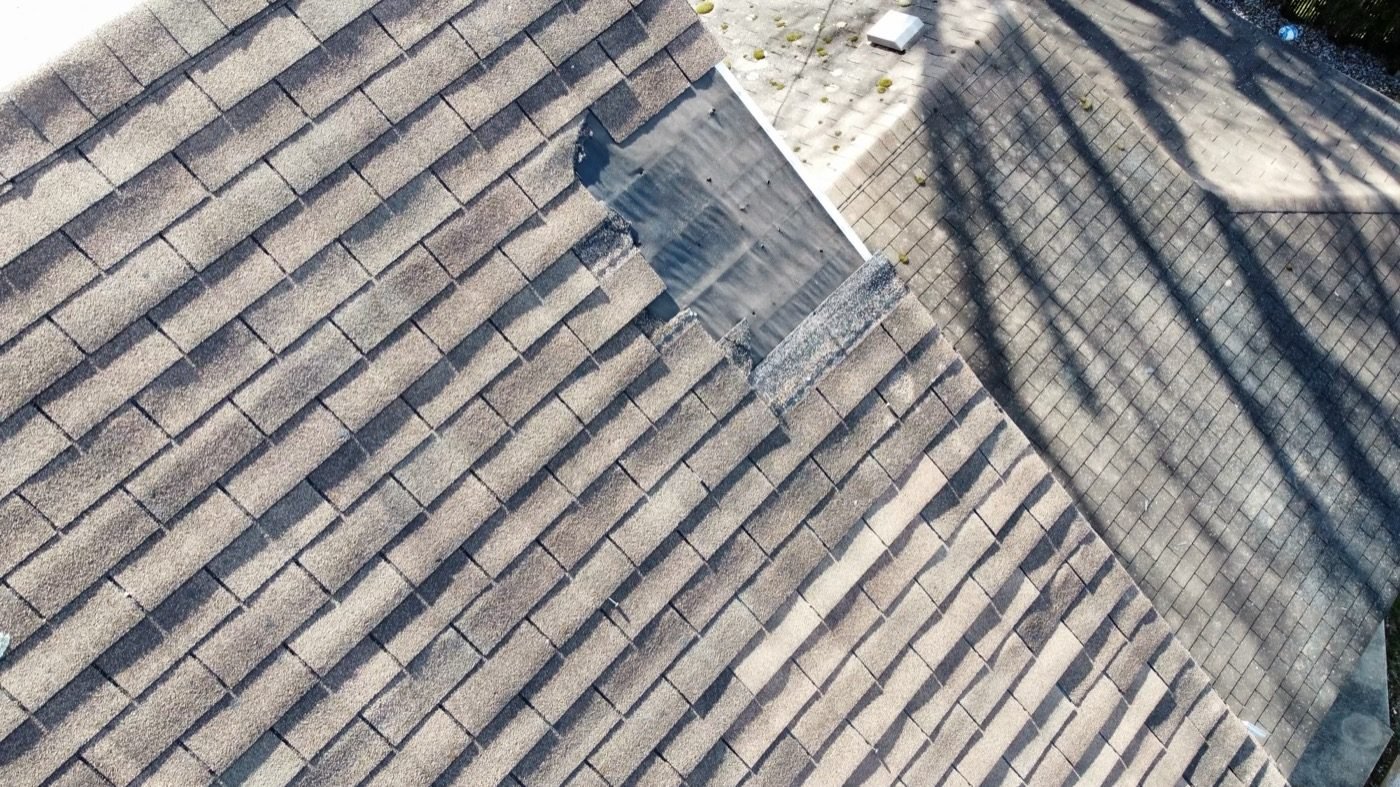
Shingle roofs don't fail overnight. The warning signs build over years — and by the time most homeowners notice, the damage has already gone deeper than the surface. Here's what a roof approaching the end of its service life looks like from above.
Torn, Lifted & Missing Shingles
When shingles tear, lift at the edges, or go missing entirely, water gains direct access to the underlayment and deck below. What looks like a surface issue can quickly become a structural one — and water damage that hides in the attic is often far costlier than the roof itself.
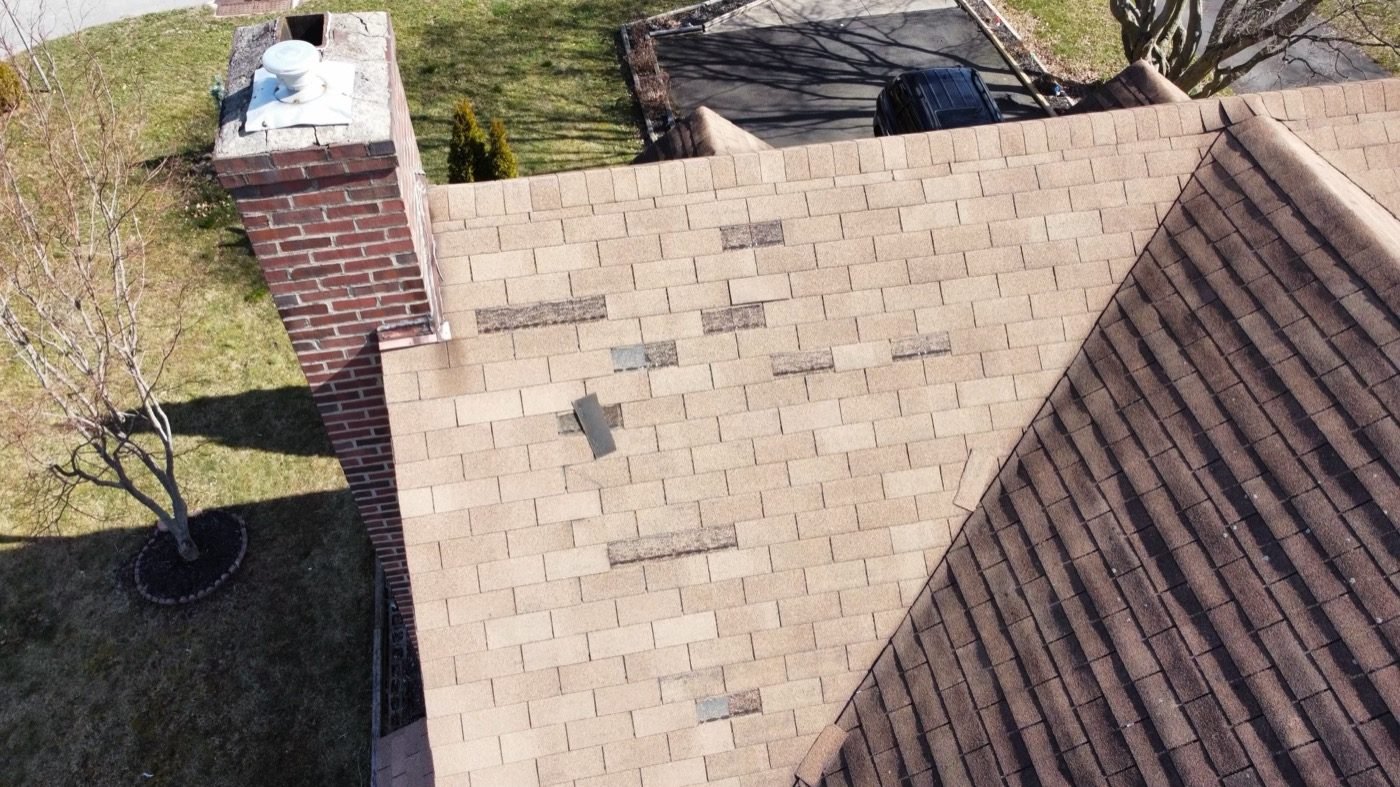
Granule Loss & Repeated Patching
Dark discolored patches, visible repairs, and granule loss across the field are signs that a shingle system has exceeded its service life. Patching buys time — it doesn't restore the system. When repairs become recurring, a full replacement is the smarter, more cost-effective long-term call.
If your roof shows any of these signs — or if it's been more than 15–20 years since the last replacement — a professional inspection will tell you exactly where things stand, whether it's time to act, and what your options are.
Schedule a Free Roof InspectionArchitectural shingles, also known as dimensional shingles, are one of the most common roofing options used throughout PA, NJ, and Delaware. They are designed with a layered, dimensional appearance that gives the roof more depth than older 3-tab shingles. Architectural shingles are popular because they provide a strong balance between appearance, durability, and cost. Architectural shingles are a good option for homeowners who want a dependable roofing system with a clean look, strong weather performance, and long-term manufacturer-backed material protection.
For many properties, architectural shingles are the best overall choice because they provide reliable protection while maintaining a clean and professional appearance.
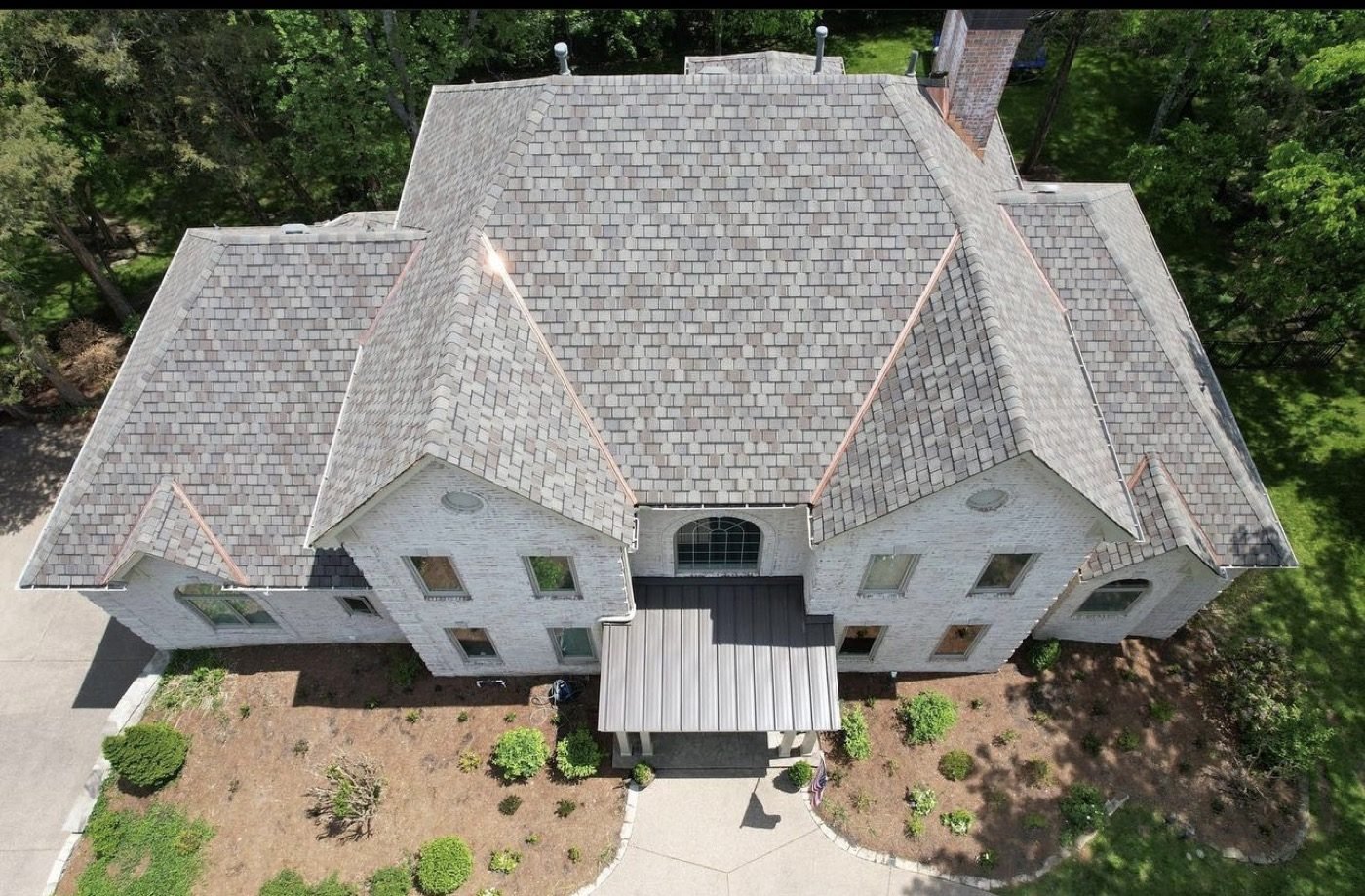
Grand Manor shingles are a premium shingle roofing option designed to create the appearance of natural slate while using an asphalt-based roofing system. They are thicker, heavier, and more visually defined than standard architectural shingles. Grand Manor shingles are often selected for larger homes, custom properties, historic-style properties, and buildings where appearance is a major priority. The biggest advantage of Grand Manor is the high-end look. It creates deeper shadow lines and a more substantial roof profile, giving the property a premium appearance without requiring a full natural slate roofing system.
Grand Manor is not usually chosen because it is the lowest-cost option. It is chosen when the homeowner wants a roof that adds visual value and gives the property a more elevated look.
the Difference? Architectural shingles and Grand Manor shingles both provide protection, but they are designed for different goals. Architectural shingles are the most common choice because they offer a strong balance between cost, durability, and appearance. They are practical for most properties and provide a clean, dimensional look. Grand Manor shingles are more of a premium roofing option. They are designed for homeowners who want a more high-end appearance, deeper profile, and slate-like finish.
Main Advantage Balance of value and performance Premium appearance and long-term value The right choice depends on the homeowner’s goals, budget, desired appearance, and how long they plan to keep the property.
The lifespan of a shingle roof depends on the material selected, installation quality, attic ventilation, roof pitch, sun exposure, tree coverage, and overall maintenance.
In this region, roofs experience humidity, heavy rain, wind, snow, ice, and temperature changes. Because of that, proper installation and ventilation are just as important as the shingle itself.
Architectural shingles: 25–35+ years, and Grand Manor shingles: 30–50+ years.
A roof that is installed correctly, properly ventilated, and maintained over time will generally perform better and last longer than a roof installed without attention to detail.
The cost of a shingle roof varies from property to property because no two roofing systems are exactly the same.
Because of these variables, the most accurate way to determine cost is through a proper inspection. We provide detailed estimates so the homeowner understands exactly what is included before any work begins.
Every roofing system we install includes two types of warranties to provide added protection and long-term peace of mind.
Manufacturer Warranty: Covers the roofing materials themselves, and Shelby Roofing Services Workmanship Warranty: Covers the installation.
This combination protects both the materials and the workmanship.
These warranties are also transferable. If the property is sold or ownership changes, the warranties can be transferred to the new owner, helping preserve value and maintain continued protection.
One of the most common mistakes is focusing only on the shingles themselves. The truth is that the installation process determines whether a roof performs for decades or develops problems prematurely. Even high-quality shingles can fail if the roof is not installed properly.
The goal is not simply to install shingles. The goal is to install a complete roofing system that protects the property long-term.
Permits are required for most full roof replacements and provide an important layer of protection for the homeowner.
The contractor’s license is valid, Proper insurance coverage is in place, and The project meets local building code requirements.
This process helps add accountability and ensures the work is completed to proper standards.
Permits also create an official record of the work completed on the property, which can be important for future inspections, insurance documentation, resale, and long-term property records. At Shelby Roofing Services, we handle the permitting process and coordinate with the local municipality to ensure everything is completed properly.
A roofing project involves more than installation. It also requires protecting the property and maintaining a clean, organized job site. During each project:
A dedicated dumpster is used to manage roofing debris, and The dumpster is placed on protective blocks to help prevent damage to driveways and.
Debris is continuously removed and contained, and The work area is actively maintained throughout the project.
This process ensures the property is left clean and the finished result meets expectations.
Most contractors focus only on installing the roof. Our approach is centered on understanding what matters most to each homeowner and guiding them toward the right solution.
Based on these factors, we guide each client toward the roofing system that best aligns with their goals, rather than offering a one-size-fits-all solution.
Our goal is to deliver a roofing system that performs properly while providing a professional, transparent experience from beginning to end.
(Insert project photos here)
Real project photos help homeowners understand the process and give search engines stronger proof of experience. Areas We Serve Shelby Roofing Services is based in Blue Bell, PA and provides roofing services throughout the Greater Philadelphia Area.
We are familiar with the architectural styles and roofing systems commonly found in these areas, including larger custom properties, historic properties, and complex roof designs. Frequently Asked Questions
A proper inspection is the best way to determine whether the issue is isolated or if the entire roofing system is near the end of its service life. Some problems can be repaired, while others indicate that the roof system is no longer performing properly.
Yes. Architectural shingles are generally stronger, more durable, and more visually appealing than older 3-tab shingles. They are the more common choice for modern roof replacements.
Grand Manor can be worth the investment for properties where appearance, curb appeal, and long-term value are important. It provides a premium slate-like look without using a natural slate roofing system.
No. On full roof replacements, we remove the existing roofing system, including old flashing and ventilation components. Nothing is reused. The roof is installed as a new system.
Ice and water shield protects vulnerable areas of the roof where water is more likely to back up or collect. It is especially important at eaves, valleys, and penetrations.
Proper ventilation helps reduce heat and moisture buildup. This can help extend the life of the roofing system and reduce the risk of attic moisture issues.
Most shingle roof installations are completed within 1–2 days depending on roof size, pitch, complexity, weather, and wood replacement needs.
Yes. Property protection, debris management, cleanup, nail checks, and a final walkthrough are part of the process.
If you are considering a shingle roof replacement or want to better understand your options, Shelby Roofing Services provides detailed inspections and clear recommendations tailored to the property.
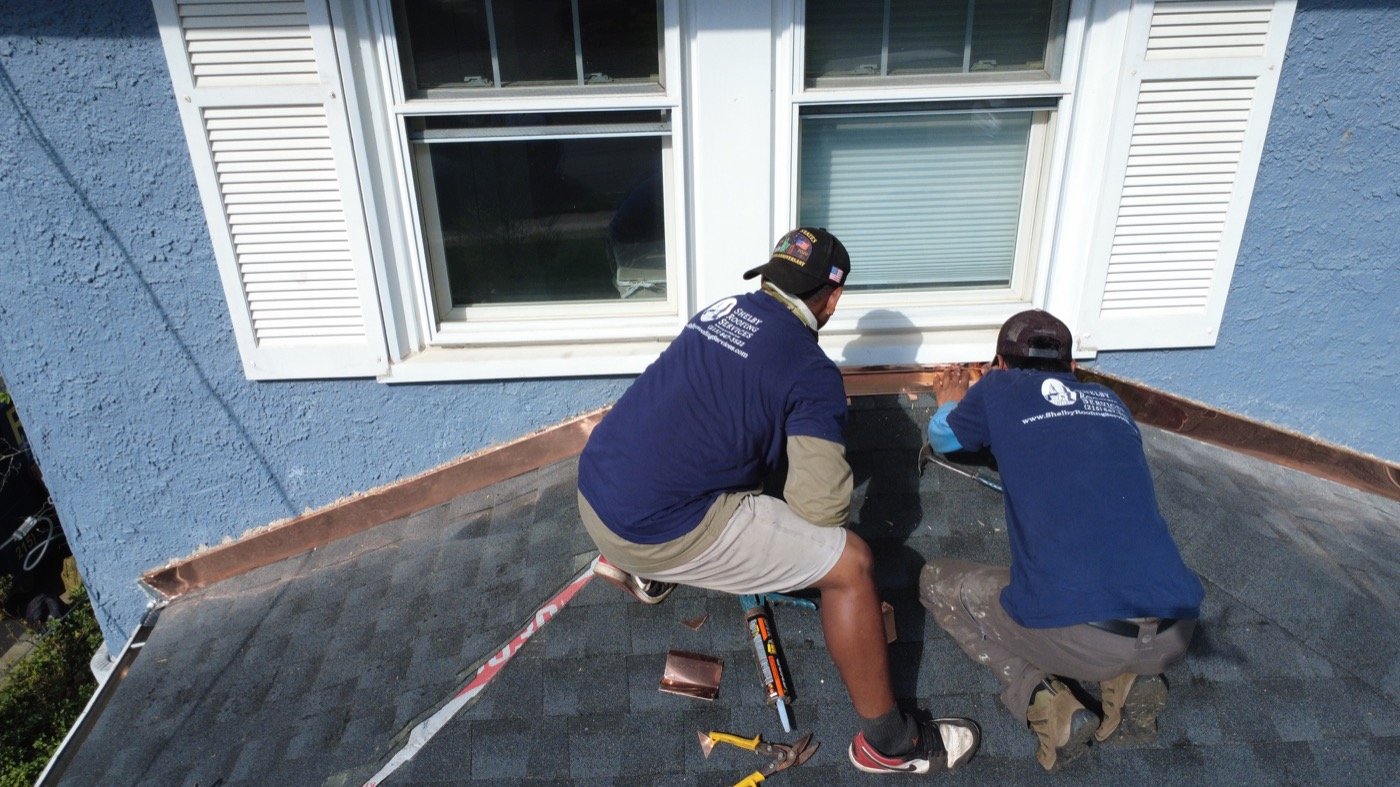
Before, during, and after aerial photography on every project. Your permanent record of quality.
Nothing from the old system is reused. Every installation starts with a fully inspected, clean deck.
Manufacturer material warranty plus our workmanship warranty — both fully transferable at sale.
Direct access to our team at every hour throughout your project. Call, text, or email.