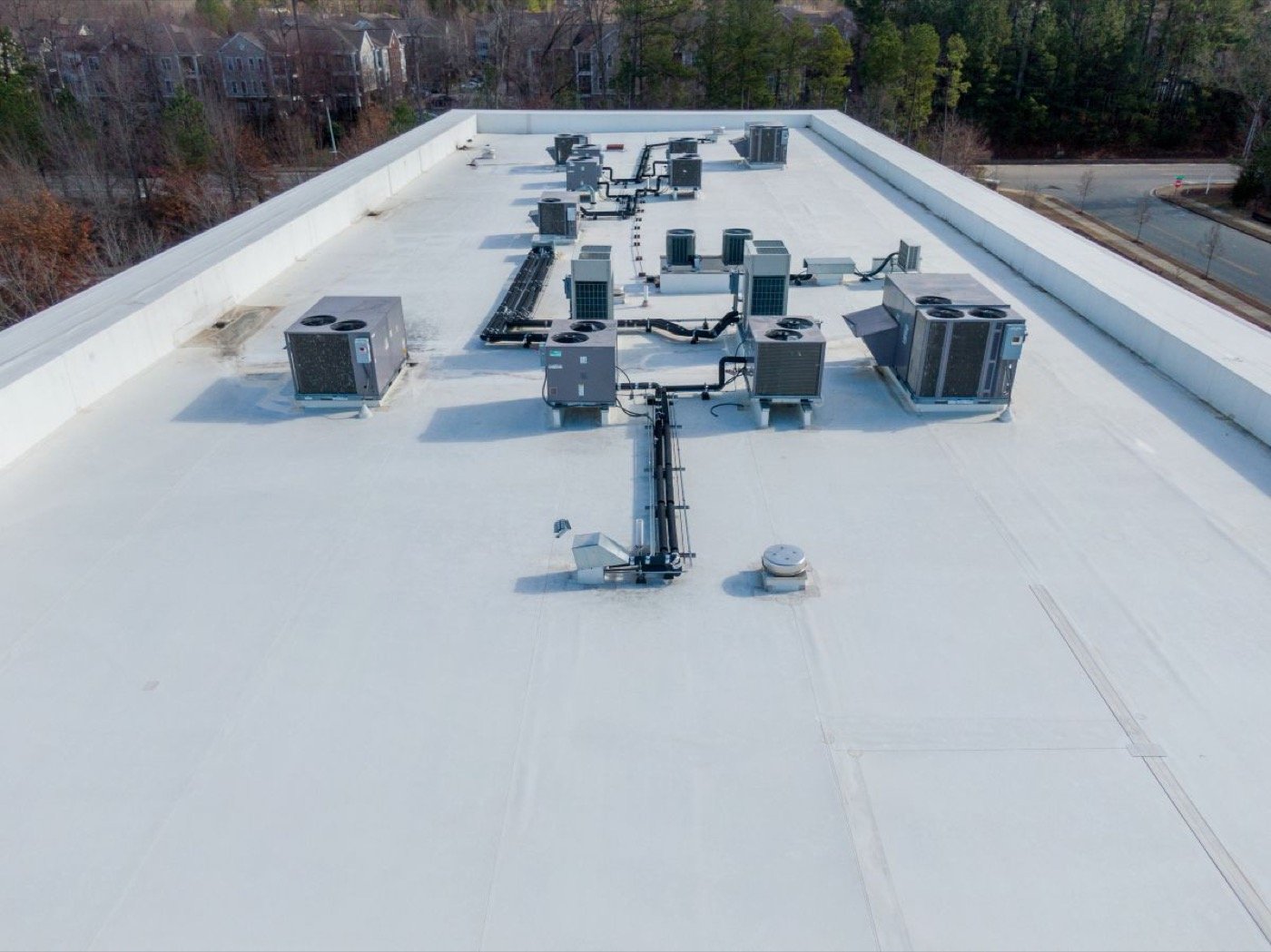
What Is a TPO Roofing System?
A TPO roofing system is a single-ply membrane system designed for flat or low-slope roofs. Instead of individual components like shingles, TPO uses large sheets of membrane that are installed across the roof to create a continuous waterproof surface.
A complete system includes:
- Roof deck or substrate
- Insulation
- TPO membrane
- Mechanical fasteners or adhesives
- Heat-welded seams
- Flashing at all transitions
- Drainage components
What makes TPO different from other flat roofing systems is its heat-welded seams, which create a strong, watertight bond between membrane sections.
How a TPO Roof Is Installed and Why Each Step Matters
Every project begins with a complete tear-off of the existing roofing system. All membranes, flashings, adhesives, and components are removed. Nothing is reused.
Once removed:
The roof deck is inspected, Damaged decking is replaced, and Wet insulation is removed.
This ensures a clean and stable foundation.
1
Insulation Installation (Base Layer of the System)
Insulation is installed over the roof deck to create a smooth and energy-efficient base. Common insulation thicknesses include: This encompasses ½ inch, 1 inch, 2 inches, 3 inches, 4 inches and 5 inches.
The correct thickness depends on:
- Property type
- Energy efficiency goals
- Budget
- Existing roof conditions
Thicker insulation can improve thermal performance and reduce energy costs.
2
Membrane Layout and Positioning
The TPO membrane is rolled out and positioned across the roof. This ensures proper alignment before fastening and welding begin. Proper layout prevents wrinkles and ensures consistent seam alignment.
3
Mechanical Attachment or Adhesion
The membrane is secured using: This encompasses Mechanical fasteners and Or fully adhered systems.
This step ensures the membrane stays in place and resists wind uplift.
4
Heat-Welded Seam Installation
Seams are welded together using heat. This is one of the most important advantages of TPO roofing. Unlike taped seams, heat welding: This encompasses Fuses the material together, Creates a watertight bond and Reduces the risk of seam failure.
Proper welding is critical to long-term performance.
5
Flashing Installation
All flashing is installed at: This encompasses Walls, Curbs, HVAC units, Pipes and penetrations and Drains.
These areas are the most vulnerable points on a flat roof.
Why Proper Flashing Materials Matter on TPO Roofing
TPO roofing systems are designed to last 20–30+ years, and in some cases longer with proper maintenance. Because of this, flashing materials must be able to perform over time.
Using:
Heavy-gauge metal flashing (.032 or greater), and Or copper flashing in critical areas.
helps ensure that these vulnerable areas do not fail before the membrane itself.
Proper flashing materials provide:
Resistance to corrosion, Long-term durability, and Strong protection at transitions.
6
Drainage and Water Flow Management
Drainage is evaluated and adjusted. Flat roofs must move water efficiently to prevent ponding.
7
Final Inspection and Cleanup
This encompasses System inspected, Seams checked, Site cleaned and Final walkthrough completed.
Types of TPO Roofing Systems We Offer
Mechanically Attached TPO (Most Common Choice)
Best when:
Large roof areas, and Cost-effective installation needed.
Best when:
Strong bond is required, and Cleaner appearance desired.
TPO System Types: What Is the Difference?
Feature Mechanically Attached Fully Adhered
Attachment Fasteners Adhesive Cost Lower Higher Movement Moderate Minimal
How Long Does a TPO Roof Last?
20–30+ years.
Depends on:
Installation, Maintenance, and Exposure.
How Much Does TPO Roofing Cost?
Depends on:
- Roof size
- Insulation thickness
- System type
- Number of penetrations
Inspection required.
Warranties That Protect Your Investment
Manufacturer warranty, and Shelby Roofing Services workmanship warranty.
Both are transferable.
Why Proper Installation Matters More Than the Material
TPO requires precision. We focus on:
- Proper welding
- Seam integrity
- Flashing
- Drainage
Permits and Why They Matter
Ensures:
Licensing, Insurance, and Code compliance.
We handle everything.
Job Site Protection, Cleanup, and Final Walkthrough
Dumpster protection, Continuous cleanup, and Final walkthrough.
What Sets Shelby Roofing Services Apart
We guide based on:
- Budget
- Energy efficiency
- Property type
- Long-term goals
We provide:
Documentation, Drone inspections, and Clear communication.
Recent TPO Roofing Projects
(Insert photos) Areas We Serve
PA, NJ, and Delaware
Frequently Asked Questions
Is TPO better than EPDM?
Depends on goals (energy efficiency vs flexibility)
Is it energy efficient?
Yes, highly reflective
Do you reuse materials?
No
Schedule a TPO Roof Inspection
We provide detailed inspections and recommendations tailored to your property.